Storm damage rarely comes out of nowhere.
In most cases, trees that fall during storms were already showing warning signs—small changes that go unnoticed until high winds or heavy rain push them past their limit. The challenge is that these signs are often subtle and easy to overlook during day-to-day life.
In regions like Mississippi, where storms and saturated soil are common, recognizing early indicators can make the difference between a controlled removal and an emergency situation.
Why Trees Fail During Storms
A storm doesn’t usually create the problem—it exposes it.
Wind adds pressure to branches and trunks, while heavy rain weakens soil stability. If a tree already has structural weaknesses, root damage, or uneven weight distribution, these conditions can cause it to fail.
Understanding what to look for before a storm arrives helps property owners reduce risk and act proactively.
The Most Common Warning Signs
A Noticeable Lean That Wasn’t There Before
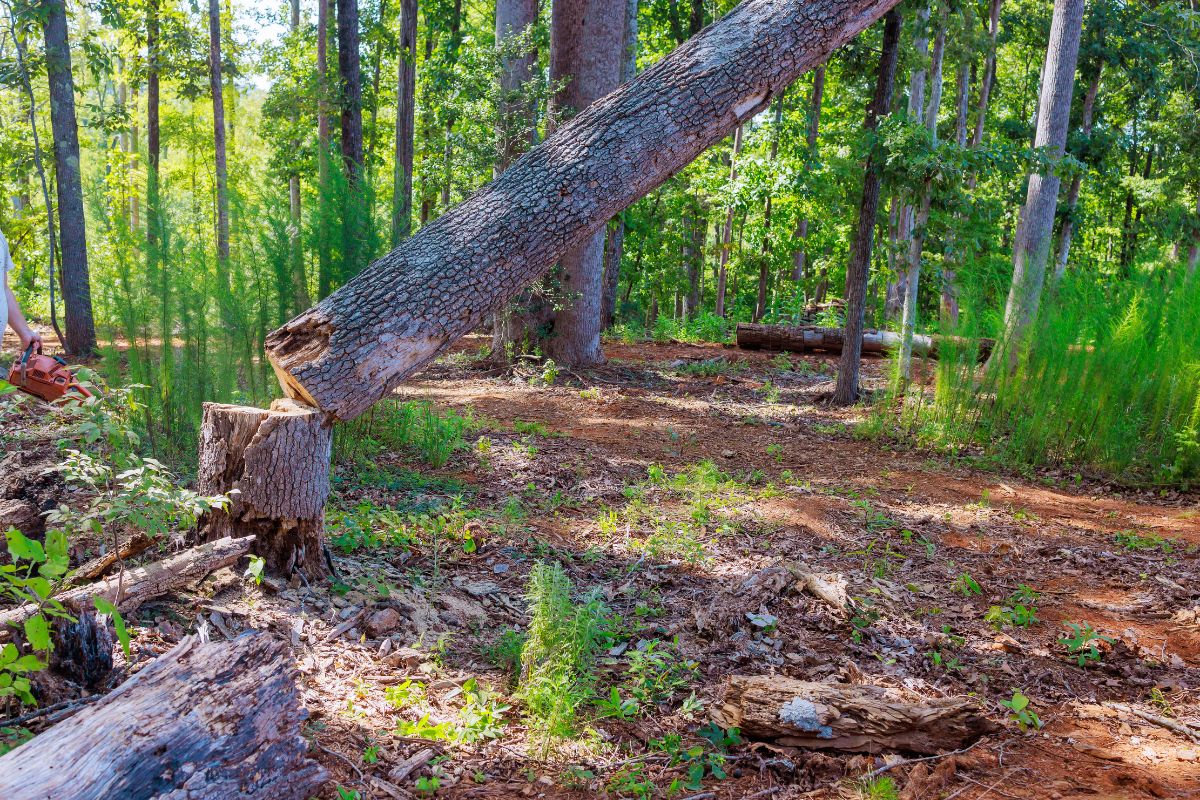
Trees don’t suddenly lean without a reason. If a tree starts tilting, especially after heavy rain, it often indicates root instability.
A slight lean may not always be dangerous, but a recent or increasing lean is a strong signal that the tree’s support system is compromised.
Cracks or Splits in the Trunk
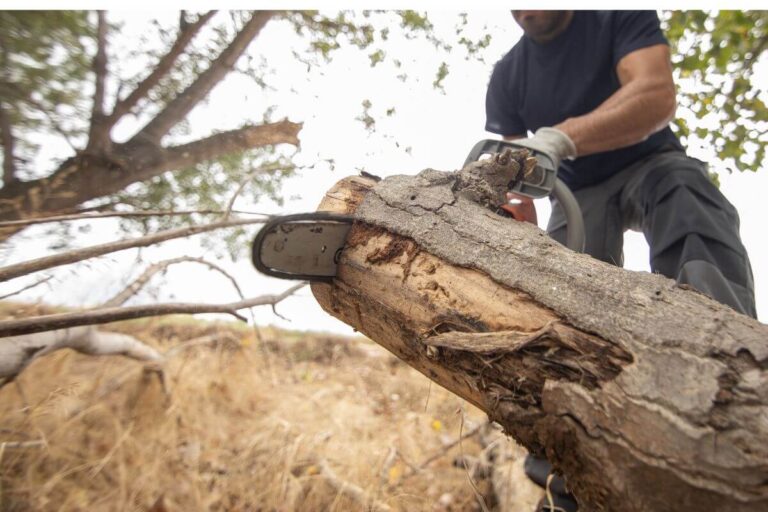
Vertical cracks, deep splits, or areas where bark is separating can indicate structural weakness. These flaws reduce the tree’s ability to withstand wind pressure.
Even small cracks can expand under stress, leading to sudden failure during storms.
Exposed or Damaged Roots
Healthy roots are usually not visible. When soil erosion exposes roots, or when the ground around the base appears lifted or cracked, it suggests instability.
Water-saturated soil further weakens the root system, making it easier for the tree to uproot.
Dead or Hanging Branches
Large dead branches are one of the most immediate hazards. These limbs are more likely to break during strong winds and can fall without warning.
Branches hanging over roofs, driveways, or walkways increase the risk of property damage or injury.
Sparse Leaves or Uneven Growth
A tree that appears thinner on one side or has reduced leaf growth may be struggling internally. This imbalance can affect weight distribution and stability.
While not always an urgent issue, it becomes a concern when combined with other warning signs.
Environmental Red Flags Around the Tree
Sometimes the tree itself looks fine—but the environment tells a different story.
Soil that remains wet for long periods, nearby construction that disturbs roots, or changes in drainage patterns can all weaken a tree over time.
Mississippi’s frequent rain and shifting soil conditions make these environmental factors especially important to monitor.
When these warning signs appear, contacting a trusted tree service Mississippi company can help determine the severity of the risk. Early intervention often prevents storm-related damage and reduces the need for emergency tree removal service calls after high winds or heavy rainfall.
If you notice several of these warning signs, a professional tree risk assessment can provide a clearer understanding of the tree’s condition and safety risk.
When a Tree Becomes a High Risk
A tree becomes high risk when multiple warning signs appear together.
For example, a leaning tree with exposed roots and cracked soil is far more dangerous than a tree showing just one minor issue. Similarly, a tree with dead branches located close to a structure poses greater risk than one in an open area.
Workplace and property safety expectations—similar to those emphasized by the Occupational Safety and Health Administration—focus on identifying hazards before they cause harm. Trees should be treated the same way.
What to Do Before the Next Storm
Preparation doesn’t require drastic action—it starts with awareness.
Walk your property and observe trees from different angles. Look at the base, the trunk, and the canopy. Changes are easier to notice when you know what “normal” looks like.
If a tree shows multiple warning signs, it’s better to evaluate it early rather than wait for storm conditions to make the situation worse.
The Advantage of Early Action
Addressing tree risks before a storm offers several advantages. With proper tree risk assessment in Mississippi, services like tree removal in Mississippi or tree trimming services can be completed under controlled conditions, reducing both cost and complexity. Early planning also allows property owners to choose professional tree removal services in Mississippi instead of reacting to damage after it occurs.
Emergency tree removal, on the other hand, often involves higher risk, limited access, and urgent timelines. Acting early with planned tree maintenance and removal in Mississippi allows for better decision-making, improved safety, and more efficient execution.
Many homeowners delay action after noticing tree defects. Unfortunately, postponing removal often increases safety risks and property damage costs. Learn more about the hidden cost of delaying tree removal.
Final Thoughts
Trees rarely fail without warning—but those warnings are often ignored.
By learning to recognize early signs such as leaning, cracking, root exposure, and dead branches, property owners can reduce the likelihood of storm-related damage. In storm-prone areas like Mississippi, this awareness becomes even more valuable.
Taking action before conditions worsen helps protect property, improve safety, and avoid unnecessary emergencies.
For those who want a more structured approach to identifying and managing tree risks, working with experienced professionals like Griffin Solutions can help ensure that potential hazards are addressed before they become serious problems.