Warehouse floors take constant abuse. Heavy forklift traffic, pallet movement, oil drips, packaging debris, and dust accumulation create hazardous conditions if not properly managed. Over time, neglected floors increase safety risks, damage equipment, and reduce operational efficiency.
A structured warehouse floor cleaning strategy is essential for maintaining safe, compliant, and productive facilities.
Why Warehouse Floor Cleaning Matters
Warehouse floors are one of the highest-risk areas in any industrial facility. When dirt, grease, and debris build up, they contribute to:
Slip and fall hazards
Tire wear on forklifts
Reduced visibility of safety markings
Dust circulation throughout the facility
Maintaining clean floors helps support workplace safety standards, including those associated with the Occupational Safety and Health Administration (OSHA), which emphasizes safe walking-working surfaces.
Clean floors are not just about appearance—they directly impact risk management and operational performance.
Common Warehouse Floor Contaminants
Understanding what accumulates on warehouse floors helps determine the right cleaning approach.
Concrete surfaces in industrial environments commonly collect fine dust from packaging materials, rubber residue from forklift tires, oil and grease from equipment, spilled liquids, and loose debris from pallets and shipments. Over time, these contaminants can embed into porous concrete, making cleaning more difficult and increasing safety risks.
Without consistent maintenance, contamination spreads across traffic lanes and staging areas.
Best Practices for Warehouse Floor Cleaning
Establish a Cleaning Schedule Based on Traffic Levels
High-traffic zones such as loading docks and main forklift lanes require more frequent cleaning than low-use storage areas. Facilities should assess operational flow and adjust cleaning frequency accordingly.
Daily light maintenance combined with scheduled deep cleaning helps prevent excessive buildup.
Use Industrial-Grade Floor Scrubbing Equipment
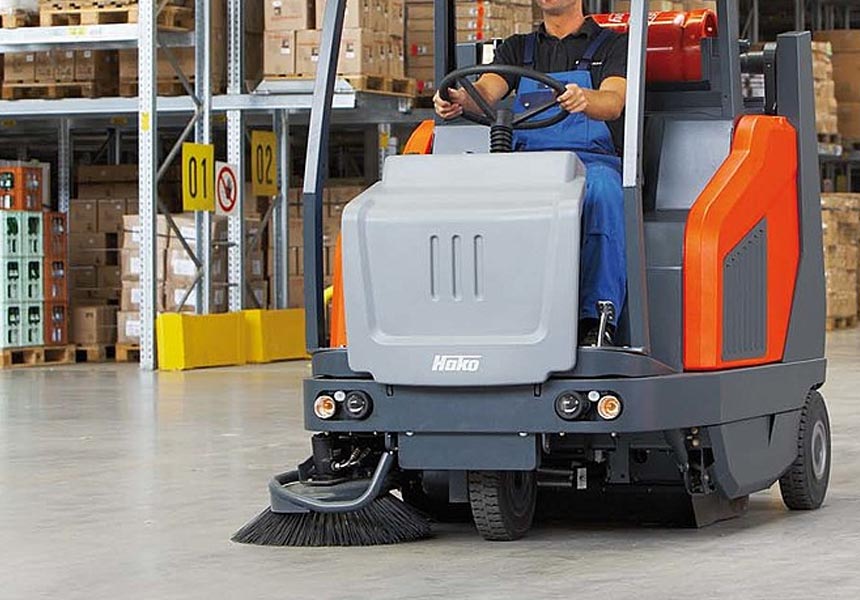
Manual mopping is insufficient for warehouse environments. Industrial floor scrubbers are designed to remove embedded dirt and grease from concrete surfaces while minimizing water residue.
Professional-grade equipment ensures deeper cleaning, faster drying times, and more consistent results across large floor areas.
Address Spills Immediately
Oil, chemical, and liquid spills should be cleaned promptly to prevent slip hazards and surface staining. Delayed response increases risk and allows contaminants to penetrate flooring.
A structured spill response process is critical for maintaining safe conditions.
Pay Attention to High-Dust Areas
Dust does not only settle on elevated surfaces—it eventually accumulates on floors, especially in high-ceiling warehouses. Regular high-dust removal helps reduce the amount of airborne particles that settle onto concrete surfaces.
Reducing overhead dust ultimately reduces floor contamination.
Maintain Clear Safety Markings
Warehouse floors often include painted traffic lanes, pedestrian pathways, and hazard zones. Cleaning practices should preserve these markings and ensure they remain clearly visible.
Faded or obscured markings compromise workplace safety.
Schedule Periodic Deep Cleaning
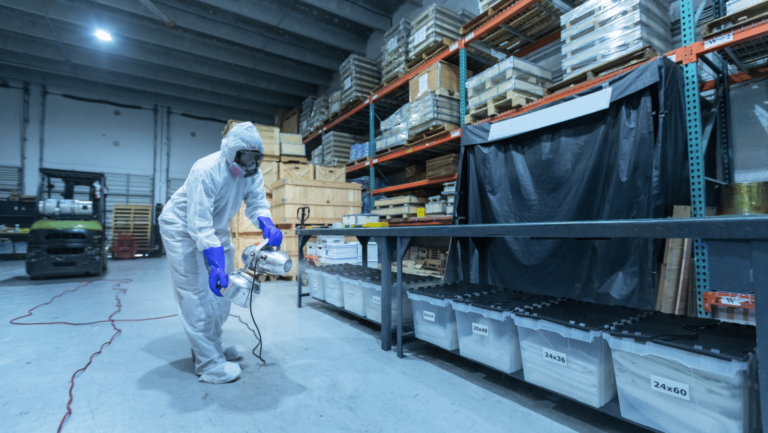
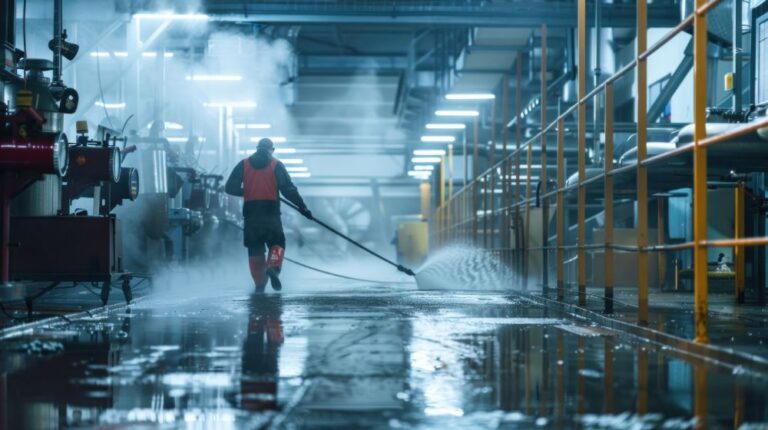
Even with routine maintenance, warehouses benefit from periodic deep cleaning. This includes intensive scrubbing, degreasing, and treatment of high-traffic zones.
Deep cleaning restores surface traction and improves overall facility presentation.
The Impact of Clean Floors on Equipment Performance
Forklifts and pallet jacks operate more efficiently on clean surfaces. Excess dust and debris can interfere with traction, contribute to tire wear, and increase maintenance needs.
Keeping warehouse floors clean helps reduce unnecessary strain on material handling equipment and supports smoother daily operations.
Warehouse Floor Cleaning and Compliance Support
Clean floors contribute to safer working conditions and support alignment with workplace safety expectations. While cleaning alone does not guarantee compliance, it plays a supporting role in reducing preventable hazards such as obstructed pathways and slippery surfaces.
Facilities that implement structured floor maintenance programs are better prepared for inspections and safety reviews.
When to Consider Professional Warehouse Floor Cleaning
Large commercial warehouses often require specialized equipment and expertise to maintain consistent results. Professional cleaning services are especially beneficial when:
Floors show visible grease buildup
Dust accumulation is excessive
Traffic lanes appear worn or stained
Internal resources cannot keep up with maintenance demands
Professional services help ensure thorough cleaning without disrupting operations.
Supporting Safe & Efficient Warehouse Operations
Warehouse floor cleaning is not a one-time task—it is an ongoing operational responsibility. Structured cleaning programs reduce risk, improve equipment performance, and support overall facility organization.
For facilities seeking dependable commercial warehouse cleaning support in Mississippi, Griffin Solutions provides professional floor cleaning and maintenance services tailored to industrial environments.
Learn more about our comprehensive warehouse cleaning solutions and how we help facilities maintain safer, more efficient operations.