Severe weather can turn a healthy-looking landscape into a property hazard in a matter of hours. Strong winds, heavy rain, saturated soil, lightning, and sudden storms can place enormous stress on trees and their surrounding root systems.
But storm-related tree damage does not always begin with the storm.
In many cases, the conditions that contribute to a fallen tree or broken branch develop long before severe weather arrives. Weak limbs, structural defects, declining tree health, root problems, poor positioning, and previous damage can all increase the potential for failure.
That is why proactive tree management is becoming an important part of property protection.
Instead of waiting for a tree to fall across a roof, driveway, vehicle, or commercial property, property owners can identify potential problems early and determine whether a tree should be pruned, monitored, treated, or removed.
For homeowners and businesses in Mississippi, working with an experienced **MS tree service** can help make tree care more preventive and less reactive.
What Is Proactive Tree Management?
Proactive tree management means addressing potential tree problems before they become emergencies.
Rather than waiting until a tree is visibly failing, property owners regularly evaluate tree health, structural condition, root stability, location, and surrounding risks.
A proactive approach may include:
* Routine tree inspections
* Professional pruning and trimming
* Removing dead or hazardous limbs
* Monitoring tree health
* Assessing root stability
* Identifying trees that may threaten structures
* Planning removal for high-risk trees
* Managing storm-damaged trees before they become larger hazards
The objective is not to remove every tree that could potentially cause damage.
It is to understand which trees represent a meaningful risk and determine the most appropriate solution.
Why Storms Can Turn Existing Tree Problems Into Emergencies
A tree may appear stable during normal weather but become vulnerable when exposed to high winds and saturated ground.
Wind places pressure on the canopy and branches, while heavy rainfall can alter soil conditions around the root system.
If a tree already has structural weaknesses, these additional stresses can increase the possibility of branch failure, trunk damage, or uprooting.
This is why preventive tree management matters.
A storm does not necessarily create the underlying problem. It may simply expose a weakness that was already present.
1. Identify High-Risk Trees Before Severe Weather
One of the simplest ways to reduce storm-related property damage is to identify potentially hazardous trees before storm season.
Property owners should pay attention to trees that show:
* Significant leaning
* Large dead branches
* Cracks in major limbs
* Trunk decay
* Visible root damage
* Previous storm damage
* Weak branch unions
* Signs of declining health
* Structural problems near buildings
Not every warning sign means a tree needs to be removed.
However, multiple problems occurring together may indicate that professional evaluation is necessary.
An experienced **tree service Mississippi** provider can assess the tree and surrounding property to determine whether maintenance or removal is appropriate.
2. Location Can Make a Healthy Tree a Property Concern
Tree health is only part of the equation.
Location matters too.
A mature tree growing in an open field may have very different consequences if it fails compared with a similarly sized tree growing next to a home.
Trees positioned near:
* Roofs
* Garages
* Driveways
* Parking areas
* Fences
* Walkways
* Warehouses
* Commercial buildings
* Outdoor equipment
may require additional consideration.
The question is not simply, “Is the tree healthy?”
A more useful question is:
What could happen if this tree or one of its major branches failed?
This property-focused approach helps owners prioritize trees that could cause significant damage.
3. Preventive Pruning Can Reduce Some Storm Risks
Not every tree problem requires removal.
Healthy trees with overgrown, dead, damaged, or poorly positioned branches may benefit from professional pruning.
Strategic pruning can help remove problematic limbs and maintain better tree structure.
However, tree pruning should not be approached as simply cutting away as much growth as possible.
Over-pruning can weaken trees and create additional problems.
Professional tree care providers can determine which branches should be removed while preserving the tree’s overall structure.
For property owners, preventive pruning can be an important part of a broader storm-readiness strategy.
4. Know When Tree Removal Is the Better Option
Sometimes maintenance is no longer enough.
A tree removal service may be appropriate when a tree has severe structural problems, significant decay, major root instability, extensive storm damage, or a location that creates an unacceptable risk to nearby property.
Removing a high-risk tree before severe weather can be considerably more controlled than dealing with the same tree after it has fallen.
Planned removal provides time to:
* Arrange safe access
* Protect nearby structures
* Coordinate equipment
* Plan debris removal
* Address the stump
* Restore the surrounding landscape
Instead of making decisions during an emergency, property owners can address the hazard on their own schedule.
5. Root Health Deserves More Attention
Branches are often the first thing people notice when evaluating storm risk.
But roots are fundamental to tree stability.
Heavy rainfall, soil erosion, construction activity, drainage changes, exposed roots, and previous damage can all affect the root environment.
A tree with compromised roots may become more vulnerable when the ground becomes saturated.
Property owners should look for changes such as:
* Soil lifting around the tree
* Exposed roots
* New leaning
* Soil cracks
* Root damage
* Changes in drainage around the tree
These signs do not automatically mean the tree must be removed.
They do indicate that professional assessment may be worthwhile.
6. Protect Buildings by Managing Tree Clearance
Trees do not need to fall completely to cause property damage.
Large branches can strike roofs, gutters, siding, windows, vehicles, fences, and outdoor structures.
Branches that constantly rub against buildings can also create gradual damage.
Proactive management helps identify trees and branches that are too close to structures.
Depending on the situation, the appropriate solution may involve pruning, structural management, or complete removal.
This is particularly important for commercial properties where tree failure could also interfere with employees, customers, vehicles, access routes, or business operations.
7. Commercial Properties Need a Broader Strategy
Storm-related tree damage can create more than a repair bill for commercial property owners.
A fallen tree may block:
* Parking areas
* Loading zones
* Access roads
* Delivery routes
* Emergency access
* Employee entrances
For businesses, even a temporary obstruction can create operational disruption.
That makes proactive tree management part of broader property maintenance.
Commercial property managers should consider trees alongside other site risks and identify which areas would be most affected if a tree failed.
Regular inspections and planned maintenance can help reduce the likelihood of unexpected disruptions.
8. Mississippi’s Weather Makes Preventive Planning Valuable
Mississippi’s combination of heavy rainfall, thunderstorms, strong winds, and seasonal severe weather makes year-round tree management particularly important.
Trees can also change relatively quickly.
A tree that appears manageable today may develop structural problems after a period of heavy rain, disease, pest activity, or storm damage.
That is why tree care should not be limited to the days immediately before or after a major storm.
Regular assessment gives property owners more opportunities to identify changing conditions.
A local **MS tree service** can provide the experience needed to evaluate trees in the context of Mississippi’s climate and property conditions.
9. Planned Removal Is Different From Emergency Removal
There is an important difference between removing a hazardous tree before a storm and removing one after it has already failed.
Planned Removal
With planned removal, property owners can prepare the site, schedule appropriate equipment, coordinate access, and protect surrounding structures.
Emergency Removal
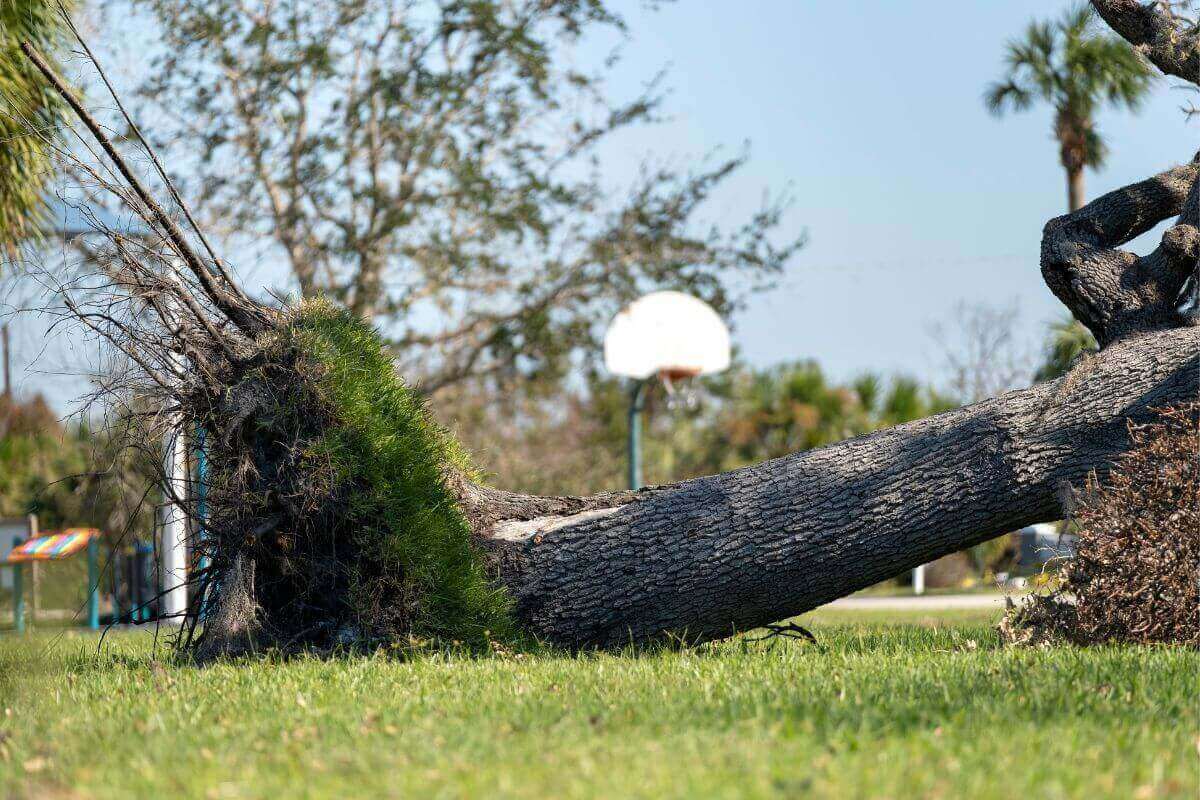
After a storm, the situation may involve:
* Fallen trees
* Broken limbs
* Blocked driveways
* Damaged structures
* Unstable trunks
* Difficult access
* Additional debris
Emergency work can be more complicated because the original tree failure may have created additional hazards.
Whenever a known high-risk tree can safely be addressed before severe weather, planned action can provide greater control.
10. Tree Management Can Protect More Than the Property
Proactive tree care can also help protect the people who use the property.
A falling tree or large branch can create serious hazards for homeowners, employees, customers, visitors, and vehicles.
This is particularly important in commercial and industrial environments where people may regularly work or travel near large trees.
By identifying potential hazards before they fail, property owners can take reasonable steps to reduce exposure to predictable risks.
Tree management therefore becomes part of a broader property safety strategy.
When Should You Consider a Tree Removal Service?
There is no single rule that says every damaged or aging tree should be removed.
Instead, the decision should consider the tree’s condition, location, structural stability, and potential consequences of failure.
Professional evaluation may be particularly important when a tree:
* Has developed a significant lean
* Shows major trunk decay
* Has extensive deadwood
* Has severe root damage
* Has sustained major storm damage
* Is located immediately beside an important structure
* Has repeatedly lost large branches
* Shows signs of structural failure
A professional tree removal service can help determine whether removal is the appropriate solution or whether the tree can continue to be managed safely.
What Property Owners Can Do Before the Next Storm
You do not have to wait for a severe-weather forecast to start thinking about tree safety.
A proactive property review can include:
Inspect the landscape
Look for visibly damaged, leaning, dead, or declining trees.
Check trees near structures
Pay particular attention to trees growing close to homes, buildings, parking areas, and frequently used paths.
Look at the ground
Check for exposed roots, soil movement, or unusual changes around tree bases.
Review previous storm damage
Trees that have already experienced significant damage may require additional attention.
Schedule professional assessment
When a tree’s condition is uncertain, professional evaluation can provide a better basis for deciding between maintenance and removal.
Why Local Expertise Matters
Tree management is not a one-size-fits-all process.
Local weather, tree species, soil conditions, property layouts, and seasonal patterns can influence how trees should be managed.
For property owners searching for tree service Mississippi, choosing a provider familiar with local conditions can make the planning process easier.
Griffin Solutions provides tree care and removal services for properties in Mississippi, including Brookhaven and surrounding areas.
The company’s services include precision tree removal, stump grinding, tree health assessment, pruning and trimming, and emergency tree removal.
Tree Removal in Brookhaven, Mississippi
For property owners specifically searching for Tree removal service Brookhaven, proactive planning can be especially valuable.
Rather than waiting until a damaged tree becomes an emergency, property owners can have potentially hazardous trees evaluated and determine whether pruning, monitoring, or removal is the better option.
Griffin Solutions provides professional tree removal services in Brookhaven, Mississippi, with a focus on safe and controlled removal.
Whether the concern is a tree near a home, commercial building, driveway, parking area, or another important part of the property, the appropriate solution depends on the individual situation.
Build a More Storm-Ready Property
Storms cannot be prevented, but some tree-related risks can be managed before severe weather arrives.
Proactive tree management gives property owners more control over their landscapes. Instead of waiting for a tree to fail, they can identify potential problems, prioritize high-risk areas, maintain healthy trees, and remove trees that have become unsafe.
The result is a property that is better prepared for severe weather and less dependent on emergency solutions.
Choose Griffin Solutions for Proactive Tree Management
Griffin Solutions helps Mississippi property owners manage trees with a focus on safety, planning, and long-term property protection.
Whether you need professional assessment, pruning, stump grinding, or a tree removal service, our team can help you determine the appropriate solution for your property.Don’t wait for the next storm to reveal a problem that could have been addressed earlier.
Contact Griffin Solutions to discuss your tree management needs and take a proactive approach to protecting your property.