In industrial warehouses, dust doesn’t just collect on floors—it accumulates in elevated areas such as ceiling beams, lighting fixtures, ductwork, and high racking systems. Over time, this buildup can create serious safety hazards, air quality issues, and compliance concerns.
High-dust removal is a specialized cleaning service designed to address dust in hard-to-reach, elevated warehouse areas. For distribution centers, manufacturing warehouses, and logistics facilities, it plays a critical role in maintaining safe, compliant, and efficient operations.
What Is High-Dust in a Warehouse Environment?
High-dust refers to dust and debris that accumulates above normal reach—typically 15 feet or higher. In warehouse settings, it commonly collects on structural beams, overhead piping, ventilation systems, storage racks, and lighting fixtures.
Unlike floor dust, high-dust often goes unnoticed until it becomes excessive. However, it eventually circulates through the facility, settling back onto floors, inventory, and equipment.
Industrial operations generate dust from packaging materials, pallet movement, product handling, forklift traffic, and manufacturing processes. Without structured removal, accumulation becomes continuous.
Why High-Dust Removal Is Critical
Fire Hazard Reduction
In some environments, excessive dust buildup increases fire risk. Fine particles can become combustible under certain conditions. Keeping overhead structures clean reduces the likelihood of dust-related hazards.
Regular high-dust removal supports safer warehouse conditions and demonstrates proactive risk management.
Improved Air Quality
Dust trapped on beams and racking systems eventually becomes airborne. This can impact employee comfort and overall air circulation.
Removing elevated dust reduces airborne particles and supports healthier indoor air conditions for warehouse personnel.
Protection of Inventory & Equipment
Dust that falls from overhead areas can contaminate products and interfere with machinery. Clean overhead systems help maintain product quality and protect sensitive equipment.
Warehouses that handle packaged goods, food products, or sensitive materials especially benefit from consistent high-dust control.
Support for Safety Expectations
Maintaining clean overhead areas supports workplace safety standards, including those associated with the Occupational Safety and Health Administration (OSHA). While high-dust removal alone does not guarantee compliance, it contributes to maintaining safe working environments and reducing preventable hazards.
Facilities that proactively manage dust demonstrate operational responsibility during inspections and audits.
Where High-Dust Commonly Accumulates
Industrial warehouses often see dust buildup in predictable locations. Structural steel beams and trusses collect fine particles over time. Lighting fixtures gather dust that reduces brightness and efficiency. HVAC ductwork and ventilation systems trap airborne debris. Storage racks, especially upper levels, accumulate dust that later falls onto stored goods.
Because these areas are elevated and less visible, routine floor cleaning alone does not address the problem.
Signs Your Warehouse Needs High-Dust Removal
Many facilities delay high-dust cleaning until visible layers form. However, early signs include reduced lighting brightness due to dust-covered fixtures, increased dust settling on floors shortly after cleaning, visible accumulation on upper racks, and employee complaints about air quality.
When these indicators appear, it is often time to schedule professional removal services.
How High-Dust Removal Is Performed
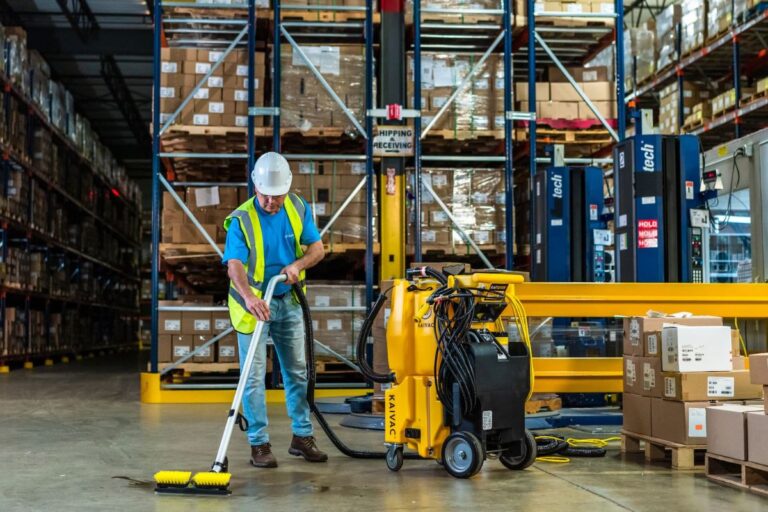
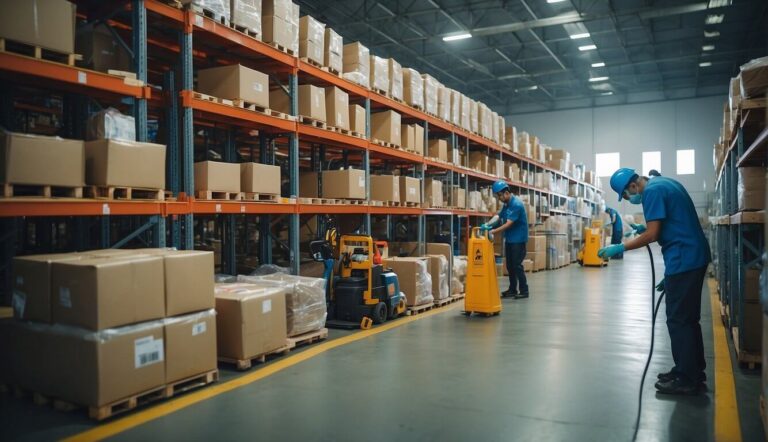
High-dust removal requires specialized equipment and safety procedures. Elevated platforms, lifts, and industrial vacuum systems are used to safely access overhead structures without disrupting warehouse operations.
Professional cleaning teams follow controlled procedures to prevent dust from dispersing during removal. The goal is not only to remove buildup but to minimize redistribution throughout the facility.
Because of the height and safety risks involved, high-dust removal should be performed by experienced industrial cleaning professionals.
How Often Should High-Dust Be Removed?
Frequency depends on warehouse activity levels, industry type, and dust generation sources. High-volume manufacturing and distribution facilities may require more frequent removal than lower-traffic storage environments.
Facilities operating multiple shifts or handling high levels of packaging materials often benefit from scheduled high-dust removal as part of a broader warehouse maintenance program.
The Connection Between High-Dust Removal & Overall Warehouse Maintenance
High-dust removal is most effective when integrated into a comprehensive warehouse cleaning strategy. Floor cleaning, spill response, equipment maintenance, and overhead dust removal work together to maintain a consistently safe environment.
When overhead dust is ignored, it undermines other cleaning efforts. Dust falls back onto clean floors, accumulates on machinery, and increases airborne particles.
Structured, recurring removal ensures long-term control rather than reactive cleanup.
Why Professional High-Dust Removal Matters
Industrial warehouses present unique challenges—high ceilings, tight racking layouts, and active operational zones. Attempting overhead dust removal without proper equipment or expertise can increase safety risks.
Professional services ensure safe access to elevated areas, proper containment of dust during cleaning, and minimal disruption to operations.
For facilities seeking reliable, industrial-grade warehouse cleaning in Mississippi, Griffin Solutions provides structured high-dust removal services designed to support safe and compliant warehouse operations.
Learn more about our commercial warehouse cleaning and maintenance services and how high-dust removal fits into a complete facility cleaning strategy.